

New institutions are constantly being improved and created in London with the purpose of educational development of the city. Considering the fact that London has a unique historical heritage, it is extremely important to preserve valuable objects. One of the places that can be called a kind of repository of these amazing items is the London Library, which stores the most interesting and unique books. Some local collections date back to the 16th century and describe the development of literature, architecture, history, philosophy, religion, topography as well as fine and applied arts. Some scholars have even said that the closure of the library could be a disaster for civilization. What is the history of this institution and what else is hidden behind its walls? Learn more at london1.one.
Foundation and history of development
The idea of creating a library was proposed by the British historian, essayist and philosopher Thomas Carlyle. He was disappointed with the conditions offered at the British Museum Library, which was always extremely crowded, books weren’t allowed to be taken outside and the general atmosphere in the library was nothing but a headache. Thus, in 1841, Thomas Carlyle, enlisting the support of like-minded people, created his own institution, in which people who had subscriptions could borrow books. The first president of the London Library was the Earl of Clarendon. In 1845, its representatives decided to change the location and move to St James’s Square. It was the beginning of the institution’s development, which was followed by a long process of expanding and improving the collections.
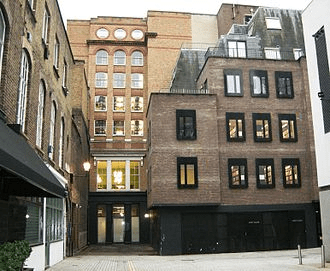
In the 1890s, the building underwent changes in its appearance and layout. Reconstruction and reorganisation of the local collections were carried out as well. The library could boast of its own classification system. In 1903, the institution published a catalogue. Its second edition was published in 1914 and later underwent gradual additions. The number of books became so large that it was necessary to expand the storage space. Therefore, in 1922, the library acquired an additional section consisting of seven levels. However, such rapid development was negatively affected by the Second World War. The London Library was heavily damaged by bombing in 1944. Then 16,000 unique volumes were lost. Despite the opening of the institution in the summer of the same year, restoration work continued until 1950. The institution managed to recover after those terrible events and a little later even expanded its territory. In 2004, the library acquired Duchess House, a four-storey building that once housed offices.
Variety of collections
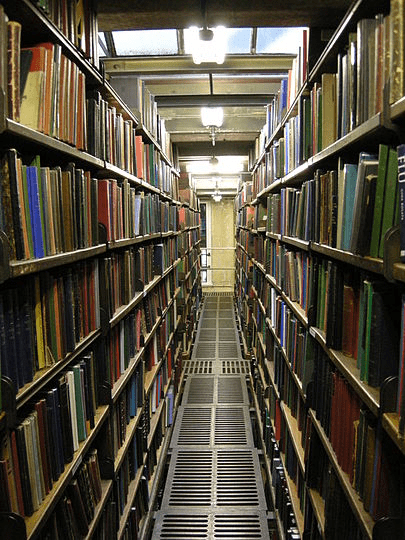
The collections of the London Library are known throughout the world and are dedicated to various fields of science. The funds contain a large number of biographies and works describing various phenomena that took place in different periods of time around the world. Meanwhile, the spheres of medicine, jurisprudence, technologies and natural sciences do not belong to the competence of the library. Actually, the collections include related books, but in small numbers. Periodicals and annual publications on a wide range of topics can also be found in the library. In addition, there are more unique collections that include the works of Omar Khayyam, hunting objects and the literary heritage of the Jewish people. Approximately 97% of materials are available to borrow. Members of the London Library play an extremely important role in its development because very often they bequeath their personal collections to the institution. In 2021, their number was 7,000.