

Standing proudly on the banks of the River Thames, right in the heart of London, is one of the world’s most iconic establishments: The Savoy Hotel. It has built an unblemished reputation thanks to its peerless hospitality and exquisite service.
The hotel has played host to a dazzling array of royalty, performers, musicians, and writers. To this day, the venue remains a true legend, where every detail speaks volumes about its style and grandeur. You can read more about the history of the hotel and its innovations on the website london1.one.
Founding and Development
The history of the area that would eventually house The Savoy Hotel dates back to 1246, when the Count of Savoy constructed a palace on the Thames riverbank. The palace was damaged by fire during the Peasants’ Revolt in 1381 but was subsequently restored.
Around 1505, Henry VII established a hospital there, which received its licence in 1512. It was a magnificent structure featuring a refectory, a dormitory, and three chapels. The hospital operated for two centuries but suffered from poor management. It was eventually dissolved in 1702, and the buildings were repurposed for various uses. During the 18th century, a portion of the old palace served as a military prison. A century later, the buildings were demolished and new ones erected in their place.
A new fire in 1864 destroyed all the subsequent buildings. A new fire in 1864 destroyed all the subsequent buildings, and the land lay vacant until it was acquired by Richard D’Oyly Carte. The theatrical impresario transitioned from a theatre producer to planning and developing a bespoke luxury hotel in London. The theatrical impresario transitioned from a theatre producer to planning and developing a bespoke luxury hotel in London. Having seen similar hotels abroad adopting cutting-edge technology, he was determined to create a place where creative professionals could perform and unwind. These guests included leading actors, opera stars, and various celebrities.
The hotel opened its doors in 1889 and immediately began attracting the most famous and fashionable people of the era. One of the most notable early guests was the actress Sarah Bernhardt, while other well-known figures included opera singers Adelina Patti and Nellie Melba.
In the 1920s, German actress Marlene Dietrich frequented the hotel to sample a taste of English luxury. With the rise of cinema, guests included Vivien Leigh, Frank Sinatra, Mary Pickford, and the ultimate blonde bombshell, Marilyn Monroe. When the Italian Film Festival took place in London, the Savoy hosted numerous Italian actors, including Sophia Loren. As rock-and-roll flourished, the first pop stars appeared, and in more recent times, the hotel has welcomed Rihanna and Taylor Swift.
Other famous guests who visited the hotel included:
- artist Claude Monet;
- artist James Whistler;
- the future King Edward VII;
- actress Sarah Bernhardt;
- opera singer Enrico Caruso;
- dancer Fred Astaire;
- comedian Charlie Chaplin;
- fashion designer Coco Chanel.
These are just some of the famous guests who stayed at the hotel. The staff kept track of their guests’ preferences so that they could provide them with everything they needed the next time they visited. For example, toiletries for Coward, or a fireproof blanket for a famous guest who liked to smoke in bed.
Groundbreaking Innovations
Since the hotel’s proprietor often travelled to the US, he saw first-hand the innovative amenities that enhanced guest comfort and brought them back to his London hotel. The Savoy complex had its own electricity generated by steam power, and water supply was provided by its own Artesian well. The entire development was lit by electricity, which guests could use at their leisure. Hot water from the boilers was used for central heating and for unlimited guest use.
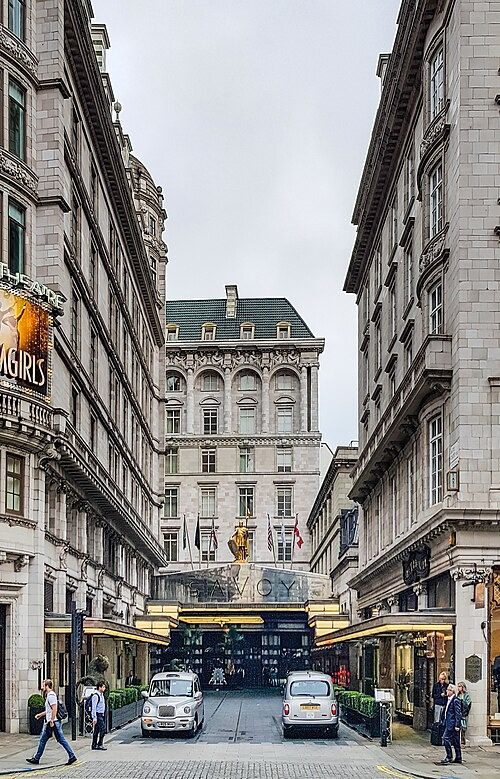
The Artesian wells also supplied water for two hydraulic guest lifts serving all floors. The lift mechanisms were imported from America as no suitable British systems were available. Additionally, guests could summon service staff from their rooms using speaking tubes.
The hotel was, and remains, beautiful and luxurious. The kitchens were fitted with the most modern equipment, complete with natural lighting and ventilation. In 1890, the great chef Auguste Escoffier arrived at the hotel and completely reorganised the kitchen. This represented a genuine revolution in the British restaurant industry, setting a standard that has been followed by most large restaurants from that time to the present day.
In the early 20th century, Guglielmo Marconi, the father of modern radio broadcasting and a frequent resident of the hotel, invented a radio transmitter that allowed ship-to-shore communication. From 1905, The Savoy Hotel began advertising “Marconigrams” on board ships as a convenient way for travellers to book rooms while on their sea voyage, before they had even arrived in England. Another key innovation was air conditioning, which was particularly important for American guests. From the late 1920s to the mid-1930s, air conditioning was installed throughout the hotel, and most windows were replaced, promising complete silence and the filtering of harmful UV rays.
Regarding more contemporary innovations, in 1984, the hotel transitioned to computerised guest accounting, as records had previously been kept manually. The hotel purchased a state-of-the-art IBM system costing £100,000, and the new system boasted a large volume of operational memory. Twelve terminals were connected to the system, marking a confident step towards modernising the establishment.
Sustainability and the Future
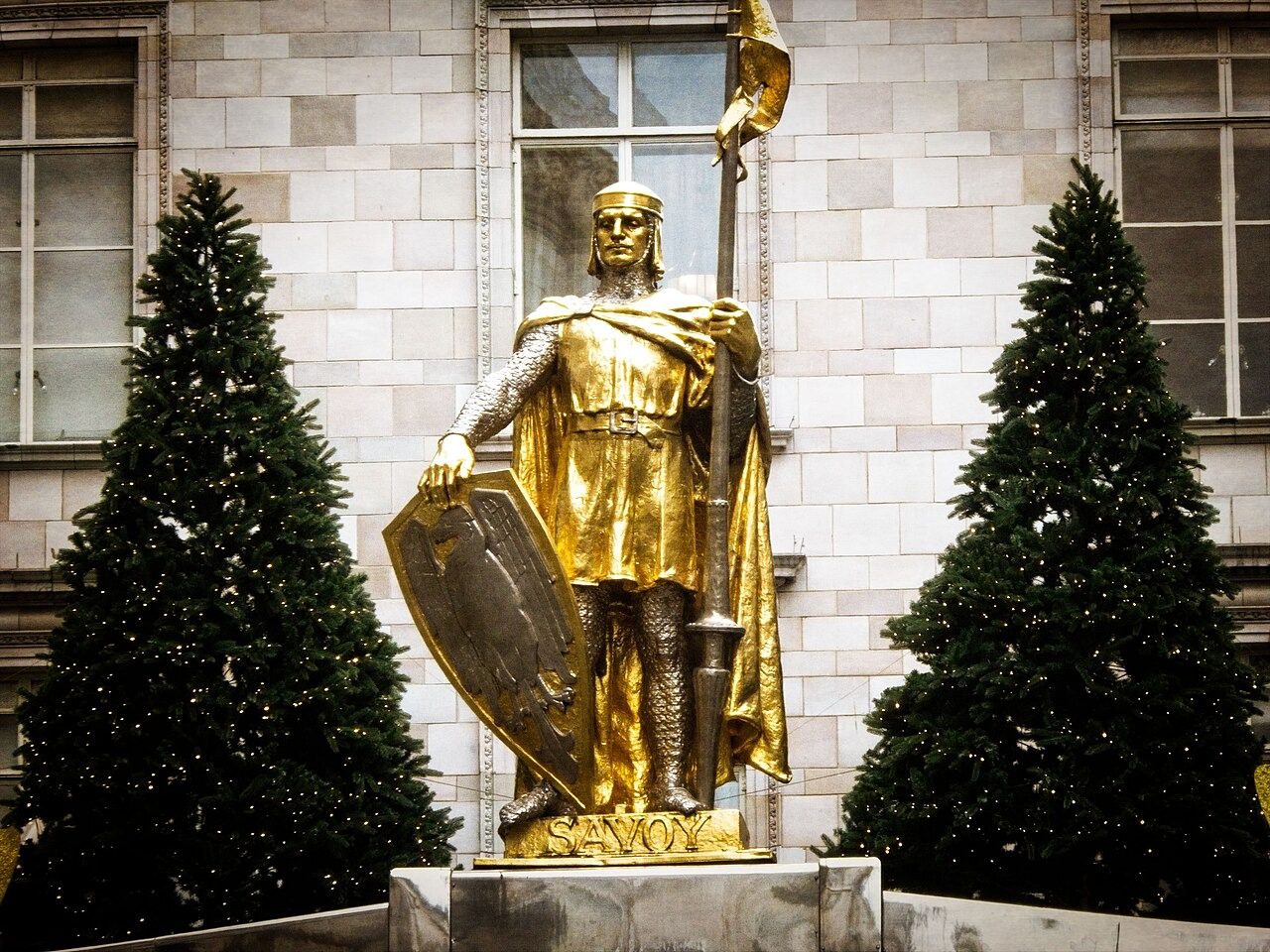
In the 21st century, The Savoy Hotel has undergone several major refurbishments to integrate modern conveniences with its historical architecture. Contemporary upgrades include a waste management system and the use of renewable energy sources. The hotel rooms and public halls have also been modernised, introducing a contemporary aesthetic to the design.
As the hotel strives to remain a cutting-edge establishment, modern artificial intelligence tools are being used to track and reduce food waste. This complements other initiatives for recycling and reusing waste. The hotel aims to become carbon-neutral by 2028.
In conclusion, The Savoy Hotel is a true exemplar of the hospitality business, having been the birthplace of professional standards in the industry. Its vibrant history serves as a reminder that a venue’s concept can be carried through the centuries, celebrating history while captivating with its elegance. Would you like to stay in the room where Marilyn Monroe lived? Write in the comments!
Sources Used: