

Bell Pottinger Private, an international public relations, reputation management and marketing firm, used to be the largest consulting company in the UK. Having neglected the growth, it later gained a reputation as a hotbed of fraudsters and despots. Learn more at london1.one.
History of the founding and development
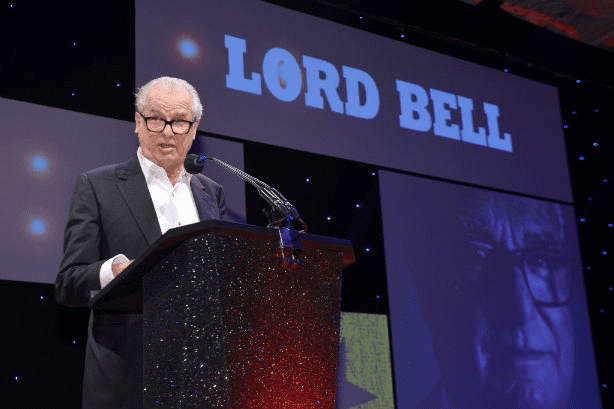
In 1985, British public relations representatives Timothy Bell and Frank Lowe decided to expand the activities of their advertising agency Lowe Howard-Spink. Having created a subsidiary, they sold it to interested entrepreneurs Bell and Piers Pottinger in 1989. Although it was registered as Chime Communications plc in 1994, it retained its previous name on some of its branches. Seeking to remove his name, Frank Lowe initiated the renaming of the company to Bell Pottinger in 1998.
In 2000, the PR agencies Harvard Public Relations and QBO became the new owners of the marketing group. Having established itself under the name Bell Pottinger Public Relations, it acquired MMK and The Smart Company in 2001. The gradual entry into the international market was evidenced by the establishment of Bell Pottinger Communications USA in 2004 and Bell Pottinger Middle East in 2005. Having merged with the global cultural communications agency Pelham Public Relations, it was recognised as the largest British public relations consulting company in 2010. According to the research service Mergermarket, the company took 14th place among the world’s and 8th place among British PR experts.
However, in 2011, Bell Pottinger was accused of non-compliance with Wikipedia policy due to the falsification of information. Having gained fame as a company dealing with controversial clients, it also became a defender of the reputations of governments and regimes that abused human rights. For example, the marketing group provided services to the President of Belarus Alexander Lukashenko as well as the First Lady of Syria Asma al-Assad. In 2012, Timothy Bell and James Henderson bought part of the Chime PR business for £19.6 million. At the same time, the holding company retained the Good Relations group, which accounted for 25% of its shares. In 2014, the marketing group also acquired Centreground Political Communications Limited, introducing a new elite service.
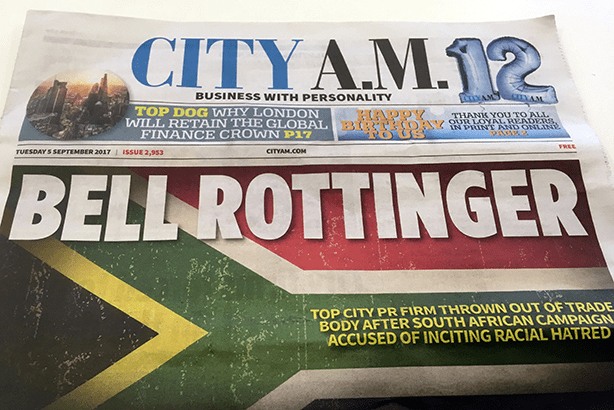
In 2016, the Bureau of Investigative Journalism revealed that Bell Pottinger Private initiated a propaganda campaign for $540 million commissioned by the US Department of Defense. Thus, between 2007 and 2011, it created and distributed fake terrorist videos, passing them off as the work of Al-Qaeda. In 2017, the marketing group was in the spotlight for its involvement in stoking racial tensions in South Africa. Its covert information campaign promoted a narrative about the illegal seizing of all the country’s resources and wealth. In the end, Bell Pottinger’s debt of £14 million led to its collapse and bankruptcy.
PR Week
Importance and outcome of Bell Pottinger’s activities
Bell Pottinger was in high demand for lobbying, speechwriting, reputation management and search engine optimisation services. It had offices in London, North America, the Middle East and Southeast Asia. Its list of reputable clients exceeded 100 companies, governments and entrepreneurs, including Greybull Capital, Hansard Global, Multiplex Wembley, NATS Holdings, Qatar Airways, Reliance Industries and many others. However, the whitewashing of repressive regimes’ reputations, controversial relations with the British government, propaganda campaigns and falsification of information put an end to its development prospects.
Metaphoric PR