

Henry Baker is a well-known English naturalist. His scientific publications became a valuable legacy for new generations of scientists. He raised important topics in his works, which, as it turned out, remained relevant and interesting beyond time. Learn more at london1.one.
Thanks to his knowledge and talent, Henry became a member of the Royal Society, which had a positive effect on his career.
In this article, we will tell you more about Baker’s life and career path. After all, he was quite an interesting and multifaceted personality from professional and personal points of view.
This is evidenced by Henry’s rather unusual interest. As you know, scientists usually aren’t interested in anything but science. However, Baker turned out to be an exception, as he was a romantic person prone to philosophising.
Therefore, if you have never heard about this scientist, you definitely have to read this article.
Beginning of the story
Henry was born in London on May 8, 1698.
When the boy turned 15, he was apprenticed to the famous bookseller John Parker.
When his study ended in 1720, Henry decided to visit his relative John Forster who was the father of a deaf and mute daughter. Henry had the gift of healing the deaf and was quite successful in that. The skill was his main income at that time. However, Baker kept his therapeutic system secret.
Future father-in-law
Eventually, Henry’s healing abilities attracted the attention of Daniel Defoe and he decided to meet a talented young man in person. They established very warm and friendly relations. On April 30, 1729, Henry married Defoe’s youngest daughter.
Important organisation
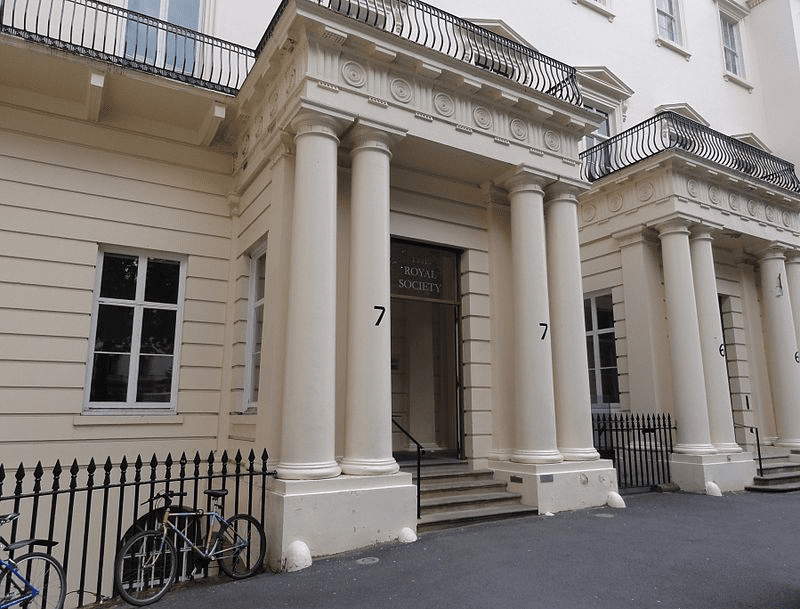
In 1740, Baker was elected as a member of the Royal Society. Formally, this organisation is called the Royal Society of London for Improving Natural Knowledge.
Among the main tasks of the society are the promotion of science, scientific consultations and international cooperation. Therefore, being a member of this organisation has been honourable and important for scientists at all times.
Returning to Henry’s biography, it is also worth mentioning that he was awarded the Copley Gold Medal for his microscopic studies of the crystallisation of saline particles in 1744.
Scientific works
Henry Baker’s scientific works are of great value. In particular, his publications devoted to the microscope, its structure and use became a guide for scientists.
Henry was also the first to draw attention to the great importance of dinoflagellates (Dinophysis algae). He noted that they cause the sparkling light in seawater.
Interest in poetry
Henry’s other hobby was poetry. He was writing his own poems and even translated famous poetic pieces.
In particular, he wrote the amazing philosophical poem called The Universe, a Poem intended to restrain the Pride of Man. The author believed that pride often caused the deterioration of relationships between close people, the appearance of resentment and other side effects of excessive arrogance.
Photo source: wikipedia