

Henry Hamilton Fyfe, an English journalist and writer, joined the British reformers of the press at the end of the 19th century. Criticising the financial and administrative failures during the First World War, he became an honest observer of world peace and war periods. Learn more at london1.one.
Early life and professional career
Henry Hamilton Fyfe was born in London on September 29, 1869. Having received his education at Fettes College in Edinburgh, he continued the journalistic work of his father, James Hamilton Fyfe. Thus, he took up the post of reporter and reviewer in the national publication The Times at the age of 17. As a supporter of the Conservative Party in his youth, Fyfe also served as a special constable during Bloody Sunday in Trafalgar Square in 1887.
In 1902, Fyfe’s professional experience allowed him to become editor in Morning Advertiser, the publication of the Licensed Victuallers’ Association. At first, his innovations were criticised by the owner of the newspaper but later attracted the attention of the press magnate Alfred Harmsworth. Soon, he appointed the journalist as editor of his newspaper The Daily Mirror to overcome its crisis. Fyfe optimised the news format, added different types of photographs and introduced exclusive materials. As a result of his activities, the newspaper’s circulation increased from 40,000 copies to 350,000 in 1905.
As a qualified specialist, Henry Hamilton Fyfe was appointed Special Correspondent for Alfred Harmsworth’s most popular publication, The Daily Mail. Since his political beliefs had shifted to the left wing at that time, he became a member of the socialist Fabian Society. Thanks to his passion for travel, the man enthusiastically covered Louis Blériot’s successful crossing of the English Channel, the Mexican Revolution and the 1914 mass protests in Ulster.
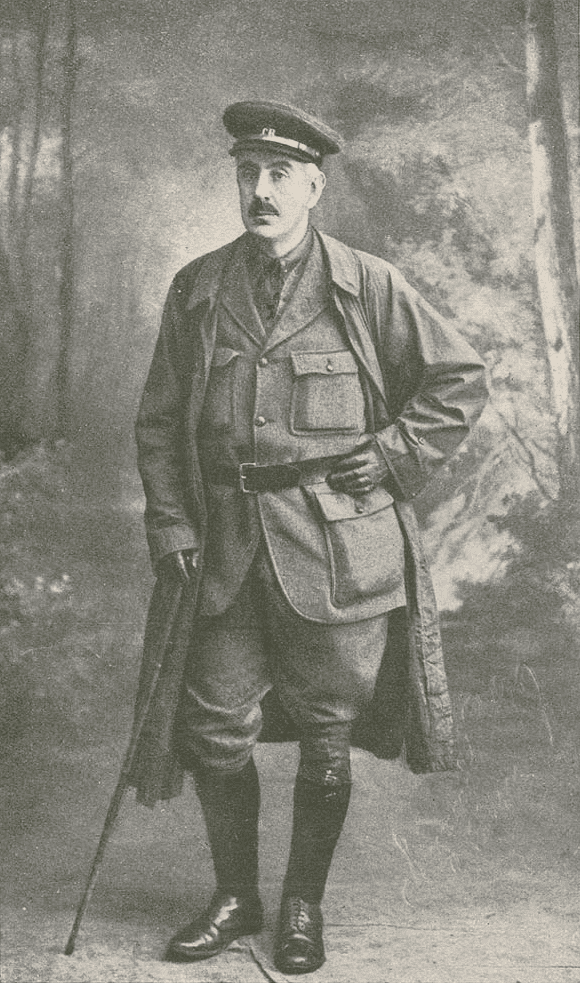
After the outbreak of World War I, Henry Hamilton Fife was sent to France and became famous for his reporting on the Great Retreat. Since the British War Secretary Herbert Kitchener didn’t want journalists on the Western Front, Fyfe had to report on the Eastern Front. While covering events in different parts of the world, the man also managed to visit Russia, Spain, Portugal and Italy. After the end of the global armed conflict, he was offered a knighthood for his work during the war. However, the journalist refused it, considering it a bribe for silence about inefficiency and corruption.
In 1922, Henry Hamilton Fyfe took up the offer by the Labour MP Arthur Henderson to become The Daily Chronicle’s editor. Having almost quadrupled the newspaper’s circulation, he resigned in 1926 due to attempts by the Trades Union Congress to control the content. Then he worked for Reynolds’ News and The Daily Chronicle until its merger with The Daily News four years later. Remaining politically left-wing, he unsuccessfully stood as a Labour Party candidate for Sevenoaks in the 1929 general election and then for Yeovil in 1931. Henry Hamilton Fyfe passed away in Eastbourne on 15 June 1951.
Wikipedia
Recognition and significance of Henry Hamilton Fyfe’s activities
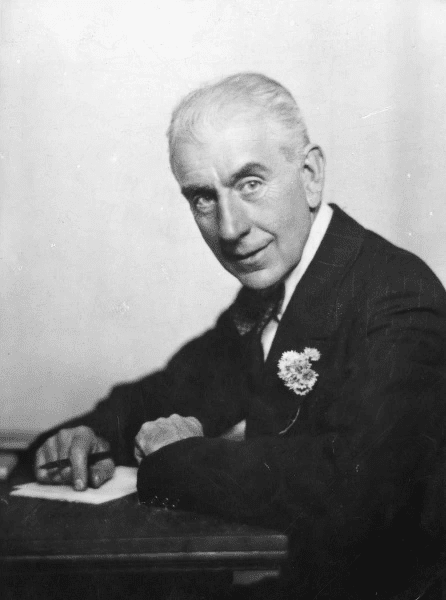
Henry Hamilton Fyfe played a major role in the coverage of daily and political life in various countries as a writer and editor of articles for social publications. Being a skilled writer, he also authored short stories, novels, plays, biographies, memoirs and political studies. Some of them are The Kingdom, The Power and the Glory, Arthur Wing Pinero, Playwright: A Study, Twells Brex: A Conqueror Of Death, Northcliffe: an intimate biography, Sixty Years of Fleet Street and others.
Media Storehouse