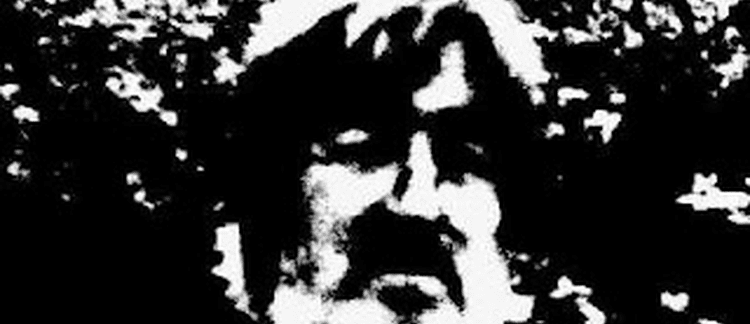
Lawrence Upton was one of the most brilliant figures in the British poetic avant-garde of the second half of the 20th century. As a poet, sound artist, and publisher, he forged a distinctive, multidimensional poetic language all his own. For over four decades, he remained a central figure among artists who were dedicated to finding bold, new ways to express themselves through language. Read more on london1.one.
Early Life and Lawrence Upton’s Poetic Journey
Lawrence Upton was born in London in 1949. Though he left school early with few formal qualifications, he later discovered his true calling in education and creative work. Upton pursued his studies at Kingston University, earning a bachelor’s degree and a PGCE teaching certificate, before completing a Master’s degree in English and American Literature at King’s College London. During this time, he became deeply involved in the capital’s vibrant experimental poetry and music scenes, balancing his teaching career with his own creative explorations.
In 1972, Upton’s experiments with recording his own poetry on tape led to an invitation as a guest composer at the Fylkingen music centre in Stockholm. For five years, he worked there periodically, developing a signature style that blended sound poetry, performance, and multimedia. While much of this early work remains poorly documented, some of his recordings have been preserved on cassette through the Typical Characteristic publishing house.
In 1976, Upton co-founded the highly influential sound poetry group jgjgjg with Clive Fencott and Chris Cheek. Their performances combined music, visual elements, and poetic performance, helping to pave the way for the European avant-garde scene. Simultaneously, Upton’s collaboration with the renowned poet and publisher Bob Cobbing became another crucial chapter in his artistic life. Cobbing published Upton’s work in the Kroklok magazine and supported his involvement with the Writers Forum publishing house.
In 1990, Lawrence Upton founded the journal RWC, which quickly became a vital platform for exchanging new forms of poetic expression. He later established his own publishing imprint, Mainstream, to champion independent artists and poets. A renewed creative friendship with Bob Cobbing proved to be a significant moment in Upton’s life. They not only resumed their collaboration but also went on to publish a number of important poetry collections together. These included Messages To Silence and Unsent Letters, two extensive volumes often regarded as autobiographical, as the author reflected on themes of loss, personal relationships, and creative self-expression.
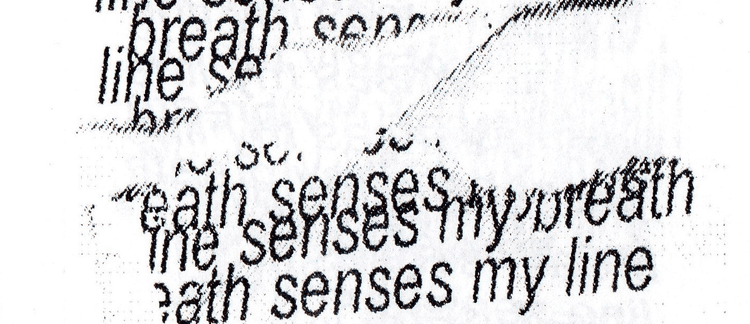
One of their most famous and ambitious joint projects was the poem “Domestic Ambient Noise” (1994-2000). This was a monumental work of visual poetry, spanning over 2,000 pages and divided into 300 separate pamphlets, which the authors performed live across the UK. Critics hailed the work as an “encyclopaedia of contemporary poetic experiment,” and it is now considered a classic of the British avant-garde. Later, in 2010, Writers Forum re-released another of their joint efforts, Collaborations for Peter Finch, which served as a summary of their long-standing creative partnership.
In the final years of his life, Lawrence Upton dedicated himself to the theory of experimental poetry. He lectured and wrote extensively on the work of Bob Cobbing and Alaric Sumner. He also maintained collaborations with artists from various fields, including musician John Levack Drever, artist and designer Guy Begbie, poet and artist Richard Tipping, improviser Benedict Taylor, and poet Tina Bass. Lawrence Upton passed away on February 16, 2020. His body was found by John Levack Drever in his home, surrounded by papers, manuscripts, and recordings.
Recognition and Legacy of Lawrence Upton’s Work
Lawrence Upton holds a distinguished place in the history of the British avant-garde as one of the most influential poetic experimenters of his era. For more than forty years, his practice seamlessly integrated language, sound, and performance, creating a multidimensional poetic language that moved far beyond traditional forms of writing. As an active participant in the Poetry Conference, the Association of Little Presses, the Writers Forum, and the Poetry Society, he played a crucial role in fostering an independent literary culture and supporting alternative voices.