

The development of paper packaging allowed England to pioneer the manufacture of corrugated boxes in the 19th century. Fairfield Enterprises, a supplier of finishing, converting and packaging tooling, made an important contribution to the development of the country’s packaging industry. Learn more at london1.one.
Foundation and development of Fairfield Enterprises
Fairfield Enterprises was founded on the initiative of Oscar Friedheim in London in 1884. At first, he was involved in selling cardboard and paper. In five years, he developed the import and distribution of equipment. After that, the entrepreneur focused on establishing business relations with foreign manufacturers for the development of the packaging industry. To implement his idea, he collaborated with Bobst, Faber & Schleicher, Muller Martini and Winkler + Dünnebier. By the 1890s, his company could already offer its customers blocking and embossing presses, card punches, corner machines, various card and paper cutters and stampers.
After becoming a limited company in 1913, Fairfield Enterprises continued its activities with a nominal capital of £17,000. However, the beginning of the First World War caused the cessation of tooling trade in the paper and packaging industry. Despite the unfavourable situation for business development, Oscar Friedheim managed to maintain the reputation of his company until his death in 1928.
During the Second World War, the bombing of Great Britain resulted in the destruction of the company’s main office, along with most of its equipment and documentation. The London Blitz also claimed the life of one of its leading employees. Resuming operations in temporary premises, it expanded its business through the acquisition of John Haddon & Co, a printing and advertising company.
In 1970, the enterprise continued to function as a holding company Oscar Friedheim Ltd. In the next decade, the need to expand further led to the construction of new floors and the roof of the exhibition hall. At the same time, the acquisition of Lasercomb Dies Ltd. in 1991 contributed to the development of the spare parts market. With the implementation of digital printing, the company remained flexible in providing services according to the needs of the new times. In 1997, it was listed on the London Stock Exchange, one of the largest stock markets in Europe.
After being subordinated to Palatine Engraving and Kennedy Grinding, Fairfield Enterprises headquarters continued to operate in Redditch in 1999. A year later, it was sold to Bobst AG, which paid 200 pence per share. The financial crisis of 2008 caused the decline of the printing industry, requiring drastic changes in the enterprise. Ultimately, it entered a new era in the printing industry and diversified its production divisions.
Friedheim International
Importance of Fairfield Enterprises to the UK printing and packaging industry
Fairfield Enterprises has played an important role in the development of the printing, design and packaging industries in Great Britain and Ireland. It has continued to pursue a policy of increasing efficiency, productivity and cost savings in the supply of finishing, converting and packaging tooling. Over a century of history has allowed it to take a leading place in London and Redditch as well as in the international market.
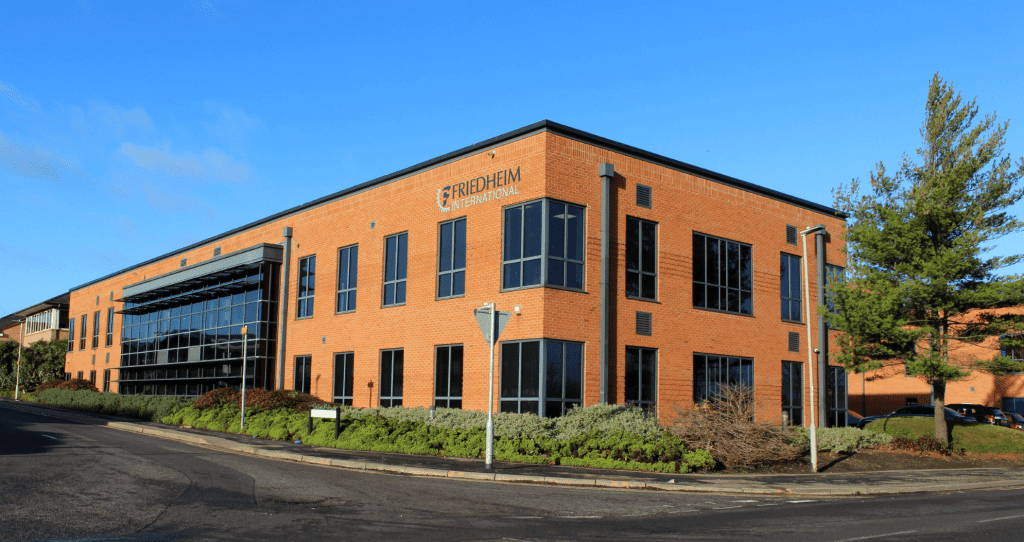
Friedheim International