

London is the economic and political heart of the United Kingdom. It’s a city where you can admire picturesque views of historic buildings and the River Thames. Tucked away among its beautiful streets is one of the world’s oldest postal services: the Royal Mail.
London’s postal service has weathered wars, the Industrial Revolution, and digitisation. The story of Royal Mail isn’t just about delivering post; it’s about the human connection that overcomes distance, transforming a stamp into a symbol of hope. For generations, people have eagerly awaited news from their loved ones. Learn more at london1.one.
Early History
The history of the Royal Mail began in 1516 when Henry VIII created the post of “Master of the Posts.” Brian Tuke was the first to hold this title. This date is confirmed by documents signed by Tuke, which are preserved in the archives of The Postal Museum in London. Tuke established a network of main post towns across the country, creating an official postal system that initially served only the monarchy. When James VI of Scotland ascended to the throne in 1603, the court moved to London. One of his first acts was to establish a royal postal service between London and Edinburgh to maintain control over the Privy Council of Scotland.
The postal service was opened to the general public in 1635 by Charles I. Letters were delivered on foot by carriers or on horseback. At each “post,” a postman would collect letters for their local area before passing them on to other couriers, who would carry them further. Letters took a very long time to reach their destination, as couriers travelled many miles a day. For example, it could take two months to receive a reply to a letter sent from Edinburgh to London. Despite these shortcomings, six official postal routes were established for transportation across the country.
In 1660, the General Post Office was established in London, where all correspondence was processed. The office coordinated letters nationwide and managed international mail, which helped to develop trade and diplomacy. A year later, the world’s first postmark was introduced, which recorded the date of dispatch to ensure reliability.
Flourishing and Reforms
In 1711, an Act of Parliament was passed that unified the postal services of Scotland, England, and Wales. Ireland joined them in 1808. The name “Royal Mail” came into use in 1784 with the introduction of the first mail coaches. The first railway mail route was launched between Liverpool and Manchester in 1830. At the same time, the complex system of postal tariffs was gradually reformed. For the first time, postage costs were paid by the sender rather than the recipient.
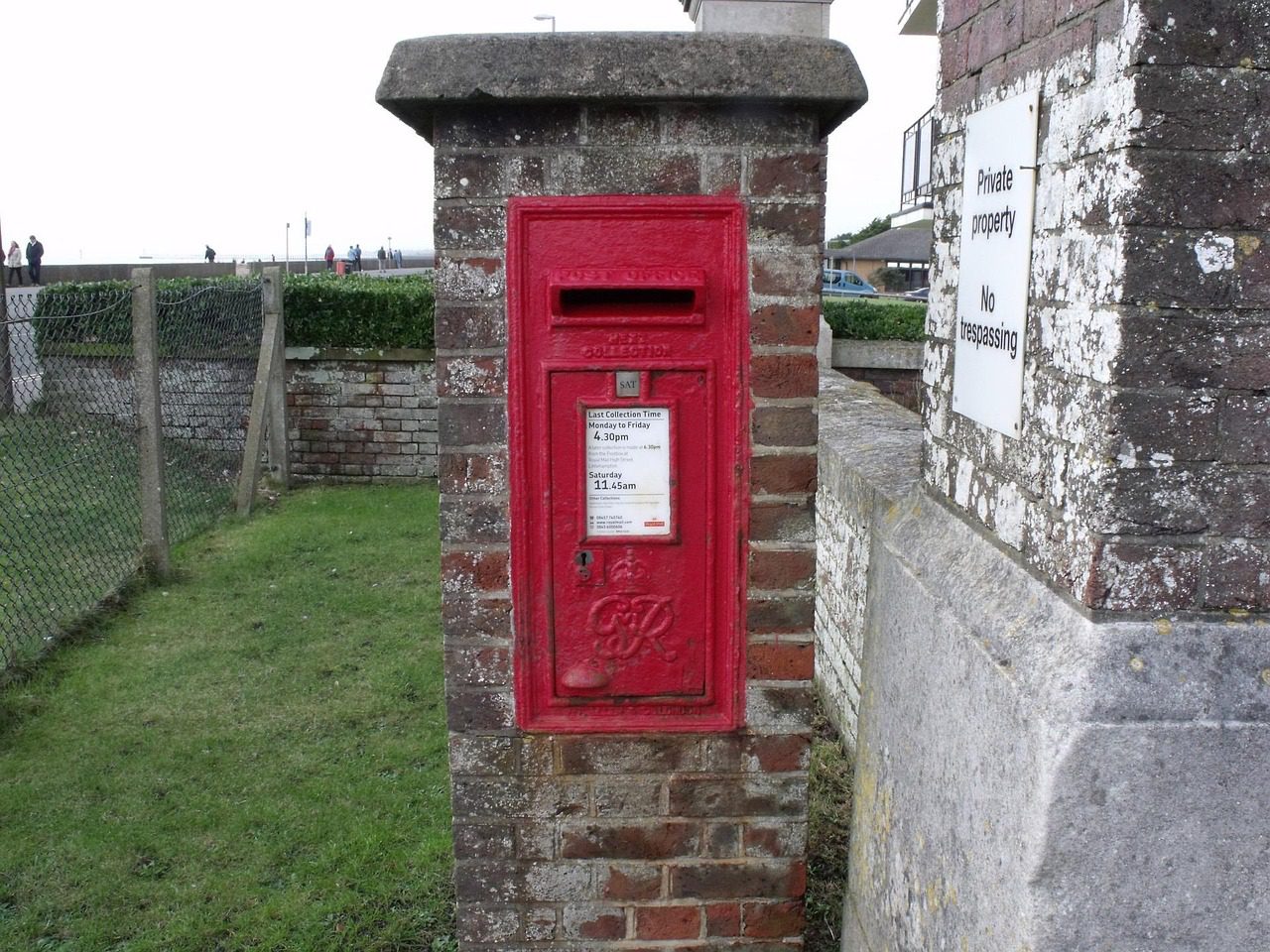
In 1840, London introduced the world’s first postage stamp, the “Penny Black,” which made the postal service accessible to all social classes. The stamp featured Queen Victoria, and 68 million were used in its first year. As the inventor of the postage stamp, the UK is the only country in the world whose stamps do not bear its name. This innovation helped to increase the volume of correspondence, and London became the centre for its processing.
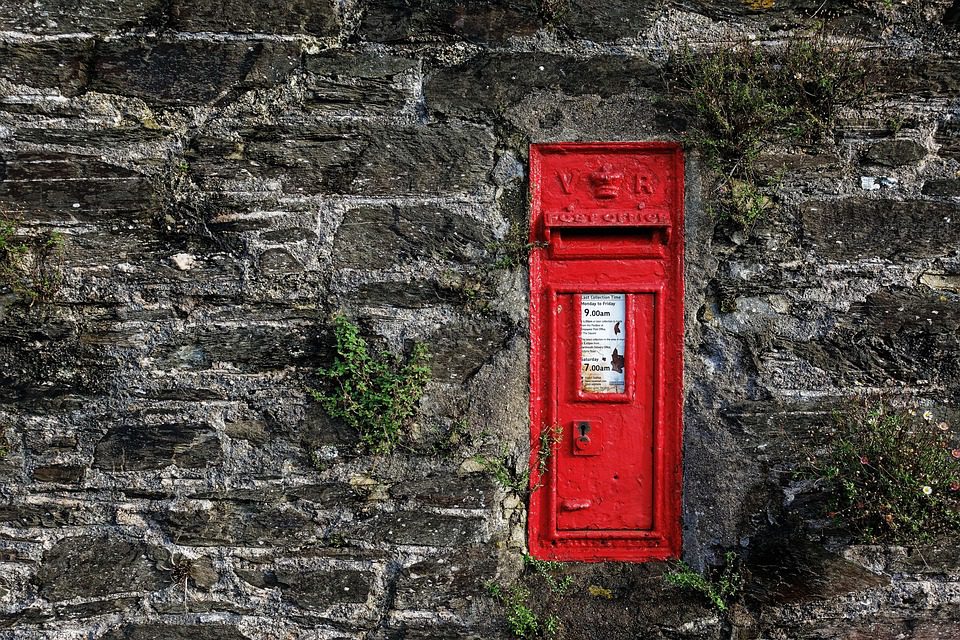
It is worth noting that the first post boxes appeared in mainland Great Britain as early as 1853. Initially, they were green and adorned with the monarch’s emblem of the time. Two years later, they were painted red, and today they are a symbol of the Royal Mail. The General Post Office on Fleet Street was the hub of postal life, employing many people who sorted and dispatched correspondence.
20th and 21st Centuries: Wars and Digitisation
The 20th century brought new challenges to the Royal Mail, as wars also affected its development. During the First World War, 12,000 postal workers served in the Post Office Rifles regiment. Sadly, 1,800 were killed and more than 4,000 were wounded. Postal workers also received 145 awards for their bravery. In 1919, the Royal Engineers and the Royal Air Force developed the first international airmail service, and the London Post Office Railway opened in 1927. During the war, the number of letters and parcels sent to loved ones increased significantly. During the Second World War, the Royal Mail continued to operate even during the bombing raids.
In 1959, postcodes were introduced on a trial basis in Norwich. Ten years later, the General Post Office was reorganised into a public corporation. The main office in London became the management centre. In the 1970s, postcodes were introduced in the city, which simplified sorting. From the 1980s, Royal Mail modernised, and automated sorting centres began to open in the metropolis. Ten years later, the first digital services were introduced. In the 21st century, Royal Mail handles about 7 million parcels daily, and a large proportion of them pass through sorting centres.
Challenges
Royal Mail faces competition from large companies such as Amazon Logistics. However, the Royal Mail maintains its reputation through a reliable and universal delivery service that ensures post is delivered even to the most remote areas.
In conclusion, the Royal Mail is not just a delivery service; it is a reflection of British history, its transformation, and the development of innovation. The Royal Mail remains a symbol of stability and communication between people.
Sources used: